


Competition is high across many industries and it can be difficult to stand out in a saturated market. Differentiation can be challenging; doing something different can mean taking a wrong turn and leaving space for competitors to overtake you. However, blending into the crowd also means your business is in danger of getting overlooked by customers. Differentiation is still possible, but it requires targeted and thoughtful messaging. Let’s take a closer look.
1. Focus on Real Experiences and Stories
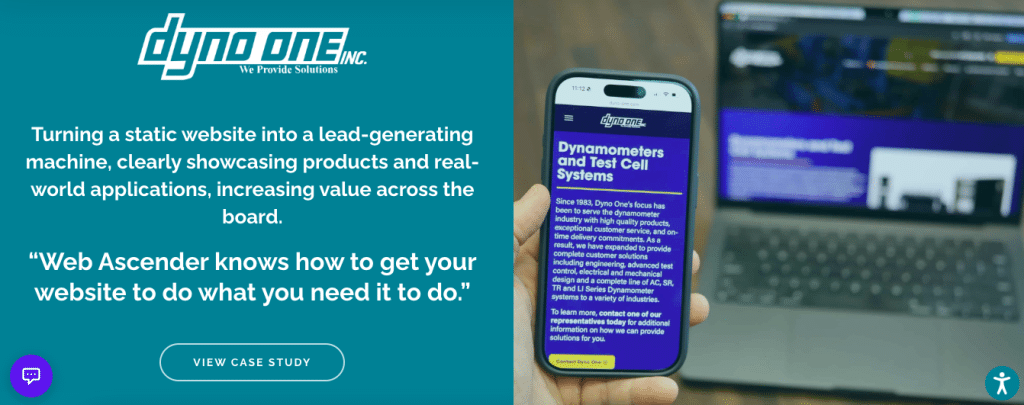
Take a look at our case studies to see some of our own customer stories and experiences.
One of the most effective ways to differentiate your business is to demonstrate real-world experience. Many companies rely on broad claims like “high quality” or “great service,” but these statements don’t provide meaningful proof.
Instead, focus on showing how your work has made a difference. This can include specific customer stories, examples of challenges you’ve solved, or measurable outcomes you’ve delivered. Even simple before-and-after scenarios can help illustrate your value in a way that resonates.
Sharing how you gained your experience is equally important. Highlighting past projects, lessons learned, or industry-specific expertise helps build credibility and gives potential customers a clearer understanding of what you bring to the table. Over time, this type of content reinforces trust and positions your business as knowledgeable and reliable.
2. Show Your Process
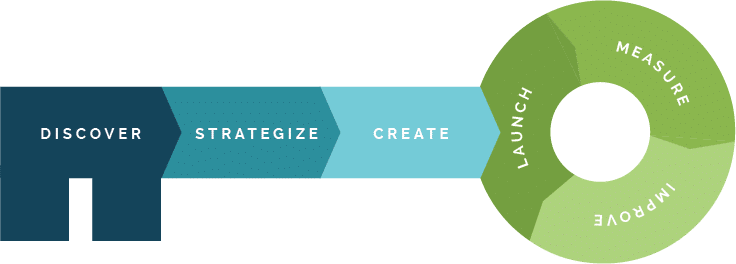
Our Launch + Growth™ Process helps us build out strategic software products, websites, and marketing plans.
Many businesses focus primarily on the final result, but the process behind that result can be just as compelling—especially when it reflects care, expertise, or attention to detail.
Whether your work involves craftsmanship, technical precision, or thoughtful planning, showing how you approach your work helps customers understand what makes you different. For some businesses, this might mean highlighting hands-on work or custom solutions. For others, it could involve demonstrating a structured, strategic approach.
Transparency in your process also reduces uncertainty. When customers understand how you work, what steps are involved, and what they can expect, they are more likely to feel confident moving forward. This is particularly valuable in industries where trust and clarity are key decision factors.
3. Show What You Do Best
Many businesses have many different strengths, but attempting to highlight every capability equally often leads to messaging that feels broad and unfocused.
Instead, identify what your business does best and what customers notice most. Make that a central part of your positioning. This could be craftsmanship, responsiveness, innovation, attention to detail, or a specific area of expertise within your industry.
Once you’ve identified your central strength, reinforce it consistently across your website, content, and messaging. Provide examples, supporting details, and proof points that demonstrate it clearly. Over time, this helps create a strong association between your business and that specific strength, making it easier for customers to notice and choose you.
4. Choose Your Market Segment
Similar to highlighting every capability, many businesses try to appeal to all audiences. While this approach may seem like it increases opportunity, it often results in generic messaging that isn’t compelling.
Defining a clear target audience allows you to tailor your messaging, services, and overall approach to a specific group of customers. This doesn’t mean excluding others entirely, but it does mean prioritizing those who are most likely to benefit from and appreciate what you offer.
When you understand your audience’s priorities, challenges, and preferences, you can communicate in a way that feels more relevant and specific. This level of alignment is often what makes a business stand out, even in a competitive market.
5. Choose Your Aesthetic Intentionally
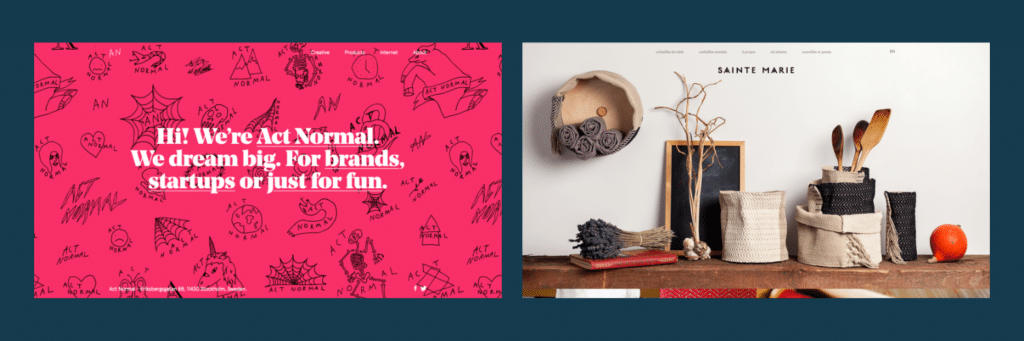
Your business’s brand identity is comprised of colors, fonts, images, and more.
Visual identity plays a significant role in how your business is perceived. Color, typography, imagery, and layout all contribute to how customers interpret your brand before they read a single word.
An effective aesthetic is not just about looking “good”—it’s about aligning your visual presentation with your brand position and your audience’s expectations. For example, a brand focused on high-end services is likely to benefit from a more refined and minimal design, while a brand targeting a broader or more casual audience may lean into a more approachable and energetic style.
Understanding the psychology of color and design elements can help reinforce your message. Consistency across your website, marketing materials, and social presence is also important, as it creates a more cohesive and recognizable brand experience.
Take a look at our brand style guide template to fill out your own brand style guide. Simply click the link, make a copy of the document when prompted, and you’ll be ready to get started.
6. Be Specific Instead of Generic
Many businesses use vague language that could apply to almost anyone in their industry. Phrases like “quality service,” “experienced team,” or “customer-focused” are common, but they do little to differentiate a business from competitors.
Specificity is what makes messaging memorable. Instead of broad claims, focus on concrete details—what you do, how you do it, and who it’s for. This might include outlining your process, defining your areas of expertise, or clearly describing the outcomes customers can expect.
The more precise your messaging, the easier it is for potential customers to quickly understand whether your business is the right fit for their needs.
7. Use Social Proof Strategically
Reviews, testimonials, and case studies are powerful tools for building trust, but they are most effective when used thoughtfully.
Rather than simply displaying a collection of positive comments, focus on highlighting feedback that speaks to specific strengths or outcomes. Testimonials that reference real experiences, measurable results, or unique aspects of your service tend to be more impactful.
Placing this type of content in relevant areas, such as near calls-to-action or on key service pages, can also improve its effectiveness. When done well, social proof reinforces your positioning and helps validate your claims.
8. Create a Consistent Experience Across Channels
Your website is only one part of how customers interact with your business. Social media, email communication, and offline touchpoints all contribute to the overall experience.
Consistency across these channels helps reinforce your brand and makes your business more recognizable. This includes maintaining a similar tone of voice, visual identity, and level of professionalism in all communications.
When everything feels aligned, it creates a stronger impression and builds confidence in your business. In contrast, inconsistencies can create confusion and weaken your overall message.
9. Focus on Clarity Over Creativity
Creative marketing is important, but it should never come at the expense of clarity. If visitors cannot quickly understand what you offer, who it’s for, and how to take the next step, even the most visually impressive website will struggle to perform and may drive visitors away.
Clear messaging, intuitive navigation, and straightforward calls-to-action are essential. Creativity can enhance these elements, but it should support them, not replace them. In many cases, businesses that prioritize clarity outperform those that rely heavily on abstract or overly complex design and messaging.
Make Your Business Stand Out
Standing out in a crowded market is not about being the loudest or being different for the sake of it. It is about being intentional; clearly communicating your strengths, aligning with the right audience, and presenting your business in a way that feels authentic and easy to understand. Over time, these efforts help you stand out and also help you build trust, credibility, and long-term relationships with your customers.