

Search engines process billions of search queries every day. Every second, internet users around the world are searching for information. Often, this information revolves around purchases they might or will make. Knowing how users are searching and why can help marketers position their content and campaigns correctly. With this in mind, let’s take a closer look at what search intent is, and how to use it in marketing.
What is Search Intent?

Search engines understand, to an extent, that users have different intents with different queries. These two searches, both about sweaters, bring up very different results based on a user’s most likely intent with each.
First, what is search intent? Search intent refers to the reason behind a user’s online search. When people type queries into search engines, they generally have a goal in mind. This might be an active, conscious goal, or a less clear goal.
Users may want to simply find information, or they might want to make a purchase. Or, they might be comparing options. Their search intent dictates the type of content they’re seeking. Understanding the intent behind search queries is key to providing content that aligns with what users need.
In general, there are four main types of search intent:
- Informational: The user is looking for information, such as an answer to a question or a guide on a topic. This might include a search like “What’s the capital of Thailand?” or “How do I change the oil in my car?”
- Navigational: The user wants to reach a specific website. This might include a search like “Facebook login” or “New Yorker homepage.”
- Transactional: The user is ready to make a purchase or complete an action. This might include a search like “buy black wool sweater” or “men’s swimsuits Target” or “flights New York to San Diego.”
- Commercial investigation: The user is researching products or services but hasn’t decided on a purchase yet. This might include a search like “best grass seed for lawns in Michigan” or “least expensive home espresso machine.”
Keep in mind any type of search intent can have different levels and types of interest. For example, an informational search like “What’s the capital of Thailand?” may indicate simple curiosity. However, an informational search like “When is the best time to travel to Thailand?” indicates an interest in travel and perhaps making related purchases.
By tailoring your content to match the search intent of your audience, you can improve your chances of ranking higher in search results and providing users with exactly what they’re looking for.
Types of Keywords and Keyphrases

The broad search “blue sweater styles” brings up a more broad set of results on this search engine, which includes how to style a sweater and where to buy one. Contrastingly, the long-tail phrase brings up a specific set of purchase-oriented searches.
In addition to search intent, it’s helpful to divide different types of users’ searches based on their specificity. In general, more specific searches indicate more serious intent or more investment from the user. This can help us map different searches to the buyer’s journey, which we’ll discuss in more detail later in the post.
First, let’s take a look at the types of keywords and keyphrases.
Broad Keywords
Broad keywords are usually one to five words, and they may encompass a lot of information, without indicating much investment on the user’s part. This might include a search like “biggest bear;” probably, the user is curious about the tallest, heaviest, or otherwise largest bear in the world. A broad keyword might also include something like “blue sweater styles;” the user might be looking, in general, for blue sweaters or how to style them. These types of keywords have high search volume, since they’re quite general.
Long-tail Keywords
Long-tail keywords are more specific and they indicate more investment and interest from the users. These types of keywords might include things like “where do the most bears live in the US?” Though this is an information-seeking search, it’s more specific; the user has a specific question they want answered. Or, it might include a search like “knitted dark blue wool cardigan size medium thrifted.” The user is looking for a specific product with this search, and they’re likely to be most invested in making a purchase.
Search Intent and the Buyer’s Journey
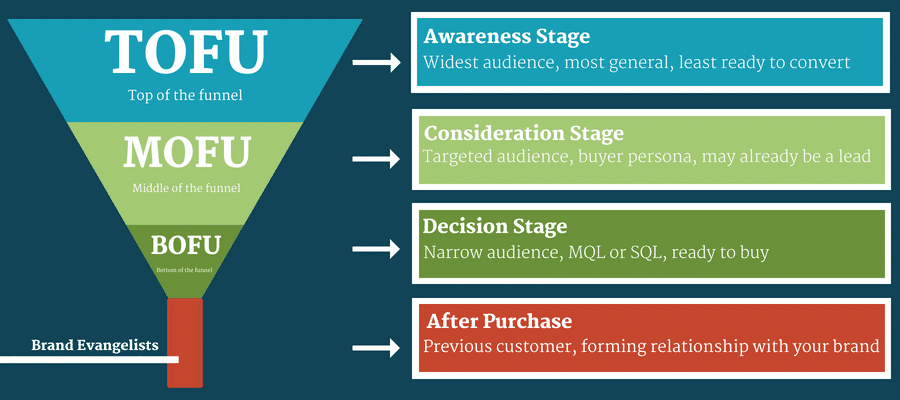
The buyer’s journey consists of three general stages: awareness, consideration, and decision. At each stage, search intent shifts based on the user’s goals. Understanding this progression is critical for marketing, as different types of content will appeal to users at different points in their journey.
- Awareness: At this stage, the user is aware they have a problem or need but isn’t sure of the solution. Their search intent is typically informational, as they are seeking knowledge about their issue.
- Consideration: Now the user has identified their problem and is looking for potential solutions. Search intent becomes more investigative, with users comparing options and researching solutions in more depth.
- Decision: At the final stage, the user is ready to make a purchase or take action. Transactional search intent dominates, as users look for product pages, reviews, and ways to buy.
By understanding how search intent aligns with the buyer’s journey, you can create content that meets the user’s needs at every stage, guiding them toward a purchase.
How to Use Search Intent in Marketing
Now that we understand search intent and how it connects to the buyer’s journey, let’s explore how marketers can leverage this knowledge. By using the right keywords and crafting content suited to different stages, businesses can capture users at each point in their journey.
1. Awareness Stage: Broad Keywords, Informational
During the awareness stage, users are just starting to realize they have a problem or need. They tend to use broad keywords like “best digital marketing strategies” or “how to improve SEO.” The search intent behind it is usually informational or may also be commercial.
At this stage, your content should be educational and informative, helping users understand their challenges while offering useful tips and insights. This also puts your brand on their radar, usually for the first time. If you can stay on their radar, you’re more likely to get a purchase from them.
By targeting broad keywords, businesses can capture traffic from users who are early in their journey, positioning themselves as thought leaders and trusted sources of information. Blog posts, guides, and educational videos are great content formats to use here.
2. Consideration Stage: Mixed Keywords, Informational and Commercial
Once a user moves into the consideration stage, they start narrowing their search queries to more specific options. For example, instead of searching for “best marketing strategies,” they might look for “best social media marketing platforms.” These more narrow keywords reflect that users are considering specific solutions and weighing their options.
Generally, the search intent behind these keywords is more commercial, though may include some, more detailed informational searches as well. At this stage, the searches will probably include more comparative words, such as “best,” “cheapest,” “vs,” “list of,” or “alternatives to.”
At this point, your content should highlight the advantages of different solutions or offer detailed comparisons. Case studies, whitepapers, and comparison guides are particularly useful for users in this stage. The goal is to provide enough information to move them toward a decision.
3. Decision Stage: Long-Tail Keywords, Commercial
In the decision stage, users are ready to take action, and they tend to use long-tail keywords—detailed, specific phrases like “buy Instagram marketing software” or “top-rated SEO tools 2024.”
These transactional queries indicate that the user is looking to make a purchase or complete a specific action. The search intent behind these queries is almost always commercial. It might include informational searches about specific brands or products, research about flaws or issues with each product or service, or comparisons with costs, among other things.
To capture users at this stage, focus on creating content like product pages, pricing guides, or customer testimonials that show the benefits of your product or service. Clear calls to action (CTAs) and easy navigation toward a purchase will help convert these users into customers.
Understanding and leveraging search intent is a powerful tool for marketers. By aligning your content strategy with the specific intent behind search queries at every stage of the buyer’s journey, you can increase visibility, engagement, and ultimately, conversions.