

Privacy and data tracking have become critical issues for many websites. Laws like GDPR and CCPA, which regulate data tracking and user privacy, have changed, affecting businesses and organizations of all sizes. If you’ve received notices about compliance with these or similar laws, now is a good time to make changes. If you haven’t, it’s a good idea to be preemptive, and take care of these issues now. In our previous blog posts in this series, we’ve explored what GDPR and CCPA are and what they do. We’ve also explored what GDPR and CCPA mean for businesses. In this blog post, we’ll discuss some GDPR and CCPA compliance strategies that you can use, review what these rules are, and why they’re important to understand.
Note: This blog post is intended as general guidance, and is not legal advice. Always consult with an attorney when it comes to legal questions.
What Are GDPR and CCPA?
Privacy regulations have evolved quickly, and the tools most websites rely on—cookies, analytics platforms, advertising pixels, and form tracking—are directly affected. This applies to most websites that are collecting data about user activities, including using tools like Google Analytics, Meta Pixel, Hubspot, and more.
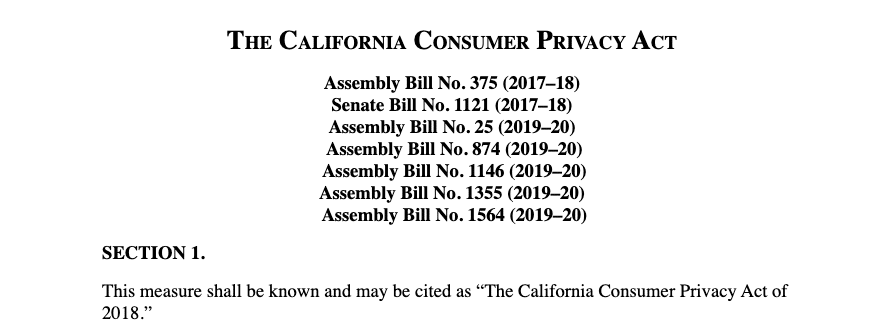
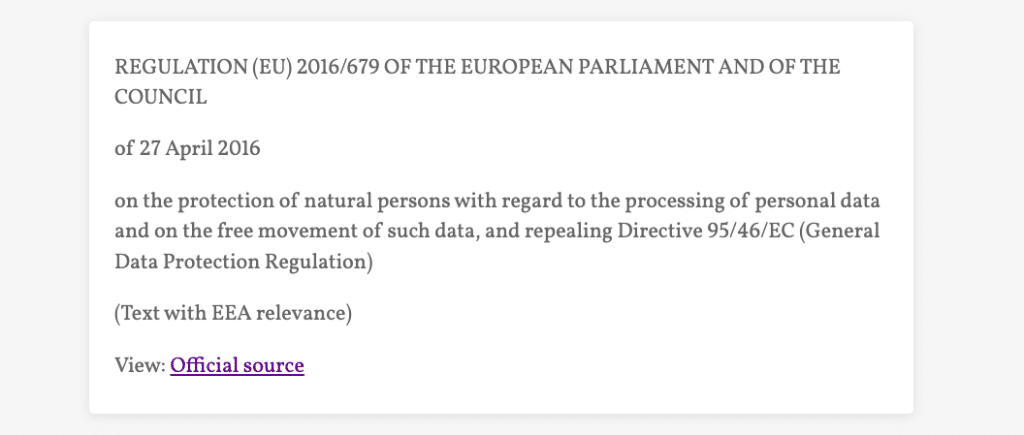
First, let’s explain what these regulations are. The most well-known data protection laws are the General Data Protection Regulation or GDPR and the California Consumer Privacy Act or CCPA. The GDPR is the European Union’s legislation, and the CCPA is California’s. These laws regulate what types of information that websites can collect about users and visitors, and how this information is stored, used, processed, and shared.
Do you have questions about CCPA or GDPR compliance?
We help our clients manage compliance in a way that works best for them.
Get in touch today >
These laws are intended to protect the rights and privacy of users, limit the data that Big Tech companies have and use on individuals, and stop bad actors from abusing this data for purposes like stalking, phishing, doxxing, manipulation or extortion, among others.
Many other states and countries have similar legislation, and use CCPA or GDPR as a model.
- GDPR (General Data Protection Regulation): a data privacy law enacted by the European Union. It regulates how websites can track and use the data of residents of the European Union.
- CCPA (California Consumer Privacy Act): a similar law enacted in the state of California, also regulating how websites may track and use the data of California residents.
- Other, similar laws exist in the following states: Indiana, Kentucky, Rhode Island, Delaware, Iowa, Maryland, Minnesota, Nebraska, New Hampshire, New Jersey, Tennessee, Colorado, Connecticut, Florida, Montana, Oregon, Texas, Utah, and Virginia.
- In Michigan, Senate Bill 359 has proposed similar policies, but has not yet been enacted.
- Other, similar laws also exist in the following countries: Australia, Brazil, Canada, China, India, Japan, New Zealand, South Korea, and the United Kingdom, among others.
With so many countries and states enacting this type of legislation (with more on the way), businesses are increasingly affected. Even if you’re not doing business in California or Europe, you’re likely to be affected by data privacy laws now or at some point soon.
Key Differences Between GDPR and CCPA: Opt-In vs. Opt-Out
Both GDPR and CCPA regulate how websites can gather, store, use, and share the data of users who visit the site. But, there are several important distinctions between them. In our previous blog post, we discuss this differences between GDPR and CCPA in more detail. For our purposes here, we’ll cover just one important distinction: how user consent is handled for each regulation.
- GDPR is opt-in: Under GDPR, users must explicitly consent before websites can collect information about their activities. This typically includes cookies used for analytics, advertising, and tracking. If a user does not opt in, tracking cannot occur. Usually, this takes the form of a pop-up or banner asking for the user’s consent to use cookies.
- CCPA is opt-out: Under CCPA, data collection may occur by default, but users must be given a clear and accessible way to opt out of the storage, sale or sharing of their data. Once a user opts out, tracking must stop. This may also take the form of a pop-up or banner informing users of the use of cookies and their options to opt out.
This difference affects how websites might implement cookie banners, consent tools, and analytics systems. Both GDPR and CCPA also require transparency, which means websites must be honest and clear about what types of cookies or tracking tools they’re using, the data they’re collecting, whether or not they’re selling that data, who they’re sharing it with, and more.
Who Do GDPR and CCPA Apply To?
The first question most website managers or owners ask themselves is whether or not GDPR or CCPA apply to them. As previously mentioned, the European Union and the state of California are not the only areas with these types of regulations, so they apply to many other areas as well. Furthermore, these regulations protect the residents of these areas; they apply to websites that are outside this area.
In general, GDPR applies if:
- You collect personal data from users located in the European Union
- Your website is accessible to EU users and uses tracking technologies like cookies, analytics, or forms
Physical location doesn’t matter. If EU users can access your site and their data is collected, GDPR may apply. However, it’s important to consider that EU regulatory authorities are numerous, but still must prioritize their cases according to needs and affects. They’re unlikely to pursue action against a website unless the abuse of users’ data is notable or your business presence there is notable.
In general, CCPA applies to your website if any of the following are true:
- Your gross annual revenue meets or exceeds $25 million OR
- You buy, sell, or share the personal information of 100,000 or more California (or applicable state) residents or households OR
- Your business derives 50% or more of its annual revenue from selling California (or applicable state) residents’ personal information.
In both cases, the determining factor is the user’s location, not where your business is located.
If you’re confused about CCPA or GDPR compliance, you’re not alone. With 20 years of experience in web development and digital marketing, we can help you manage these changes.
Get in touch today >
What Does This Mean for Your Website?
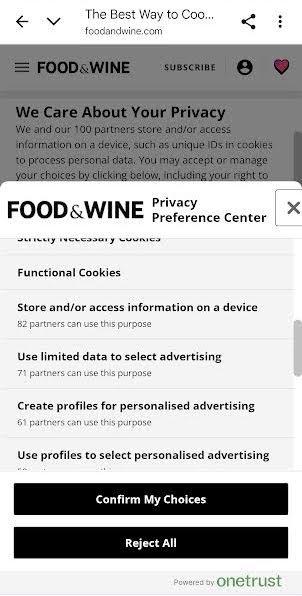
A detailed cookie policy, like this one from Food & Wine, is one way to be compliant with GDPR, CCPA, and similar rules.
Now that you know what these laws are and what they’re for, what do they actually require? These laws are lengthy and can be complex, but there are a few key aspects that are most helpful to know and understand. To learn more about what these regulations require, take a look at our previous blog post, What GDPR and CCPA Mean for Businesses.
- Transparency: Websites must inform users what data is collected, how the data is used, who it’s shared with or sold to, and how long it’s stored.
- Data minimization: Businesses should collect personal information only for the purpose described, and keep that information only insofar as it serves that purpose.
- Right to Deletion: Also called the “Right to Be Forgotten,” these types of legislation require that users can request, at any time, that their data be deleted, in part or in full.
So, what does this mean for your website? What changes are required? Nearly every modern website uses some form of tracking or data collection. These tools often rely on cookies or similar tracking technologies, which fall squarely under privacy regulations. You can still use these tools, but some adjustments are needed.
- Consent or Opt-Out Options: You’ll need to give your visitors a way to either opt-out of tracking (for CCPA compliance) or stop tracking before it starts (for GDPR compliance). Note that, in general, since GDPR is more robust than CCPA, compliance with GDPR will meet requirements for CCPA as well.
- Privacy policy: You’ll need to update your privacy policy to show what data you collect, what tools you use to collect this data, and how this data is shared or sold, if necessary. The more transparent your policy, the better.
- Updating tools or configurations: You’ll need to make sure that your tool use matches what you’ve stated in your privacy policy and consent or opt-out options. Tools like Google Analytics, Hubspot, Meta Pixel, and others are not, by themselves, compliant with GDPR or CCPA. You’ll need to make updates or changes so that they meet the requirements.
Our Preferred Strategies for CCPA and GDPR Compliance
Now that you know what these regulations are and, in general, what they require, what’s the best way to meet these requirements? There are several strategies that you might choose. Which is best for you is likely to depend on your liability exposure, type of business, amount of business, and other factors.
At Web Ascender, we conduct and manage web design and development, as well as digital marketing, analytics, and tracking tools for our clients. These tracking tools give you important data about your web traffic, conversions, sales, how your online visitors find you, which are most likely to convert, which advertisements work best for your business, and more. It’s our goal to give our clients access to this important data, while also protecting users’ rights to privacy. We’ve developed these strategies in an effort to find that balance.
Strategy A: GDPR Compliance
This approach prioritizes the strictest standard, which requires a user to explicitly consent to tracking. With this strategy, we’ll disable automatic tracking and put technology in place to control the delivery of cookies and trackers until or unless the user agrees.
As you might expect, most users will not provide consent for tracking cookies. This will then disrupt important data that shows important metrics like traffic, conversions, page performance, ad performance, and more. With this strategy, we’ll also put into place technology that does not use third party cookies, but still provides this important information and helps to balance your data.
This strategy typically includes:
- Replacing or reconfiguring tools like Google Analytics or HubSpot with privacy-focused alternatives
- Implementing consent tools that prevent tracking until a user opts in
- Updating your privacy policy and cookie policy to clearly explain data usage and consent
This strategy provides strong coverage across jurisdictions and future-proofs your site as privacy laws continue to evolve.
Strategy B: CCPA Compliance
As previously mentioned, CCPA requires the user to opt out of tracking. To implement this, we’ll equip your website with technology that manages the opt-out process and halts the delivery of trackers if or when a user requests it. Since these trackers load automatically, this CCPA compliance strategy requires software that removes the trackers after a user opts out. We’ll also install analytics tools that do not use third-party cookies, but still balance your data and give you important insights, similar to Strategy A.
This compliance strategy typically includes:
- Implementing systems that record whether a user opts out of tracking
- Ensuring tracking stops when or if users opt out
- Updating privacy and cookie policies to meet transparency and disclosure requirements
This strategy allows you to continue using common marketing and analytics tools while respecting users’ choice.
Strategy C: Cookie-Free Analytics
Another option is to eliminate third-party cookie-based tracking completely. This is an effective way to limit your exposure, as no information is directly attached to any user. Instead, we can equip your website with tools to track data in aggregate, which protects users’ privacy while still giving you important data insights. We still recommend updates to your privacy policy and cookie policy to let your visitors know what tools you use.
This strategy typically involves:
- Removing tracking tools that rely on cookies
- Implementing privacy-friendly analytics software that do not use cookies or store personal identifiers
- Simplifying consent requirements while still retaining essential performance insights
- Updating privacy and cookie policies to let your visitors know what data you collect and how it’s used
This option can reduce compliance complexity while still providing actionable website data.
Strategy D: Build and Implement Your Own Solution
You can also choose to research and implement a compliance system working with your own legal team and technical team. If you operate in a unique legal space, such as government, defense, advocacy, or another area, this might be ideal for you. Or, if you’re not yet ready to implement a solution or feel that CCPA and GDPR are not currently issues for you, this might be a path to consider.
This path offers full control, but it requires care and attention on your part. You’ll need to:
- Consider regulations and privacy concerns on your own
- Implement tools that work best for your website
- Update your privacy policy and cookie policy accordingly
For some teams, this makes sense. For others, it may be unnecessarily time-consuming or difficult.
Manage Your Web Tracking and Get the Data You Need
GDPR, CCPA, and similar privacy regulations are not going away. In fact, they’re becoming the standard framework for how websites are expected to handle user data.
The most important thing isn’t choosing the “perfect” solution—it’s having a clear, intentional plan and implementing it correctly. With the right tools and approach, you can stay compliant, protect your users, and still get the insights you need to grow your business.
If you’re unsure where your site currently stands or which strategy makes the most sense for you, we’re here to help. We are digital marketing and web development experts, and we can guide you through compliance in a way that’s clear, effective, and tailored to your goals. Get in touch today and let’s chat.