

Without a clear roadmap, even the best digital marketing efforts can miss the mark. A digital growth roadmap helps to align all different aspects of your business around a shared direction. But building a digital growth roadmap isn’t easy or automatic. Let’s take a look at how to build a digital growth roadmap that works.
Start With Business Outcomes
Many businesses begin with individual tactics, like SEO or advertising, instead of addressing goals or overall directions. A good digital roadmap should begin with clarity.
Are you trying to increase revenue by 30%? Enter a new market? Improve lead quality? Reduce sales cycle time? Increase customer retention? Launch a new product line? Your marketing strategy should serve those outcomes. If it doesn’t, you’re optimizing activity, but not actually optimizing overall performance.
Before outlining initiatives, define what success looks like for your organization. What must be true for your growth efforts to be considered successful? That answer will become the anchor for every decision that follows.
Audit Your Digital Foundation
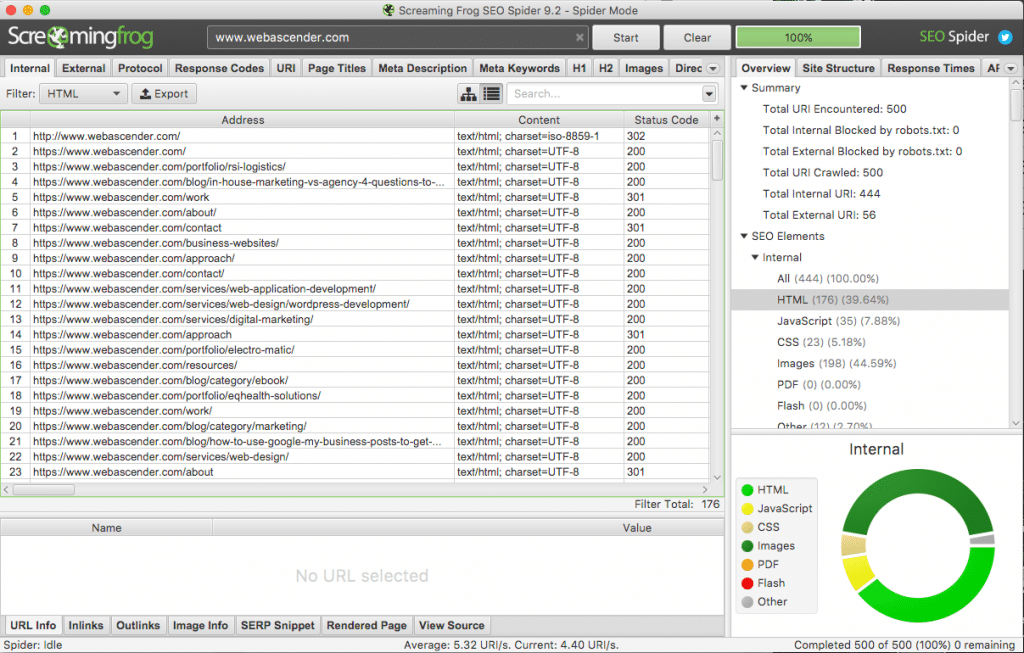
Screaming Frog SEO spider is an auditing tool that will crawl your entire site, or subfolders, and give you important SEO information about each page.
If your digital foundation isn’t currently set up for growth, it will be difficult to create a strong plan. Your current digital resources will play a big role in the direction of your digital growth. Assessing your resources from the start will help you adapt your plan accordingly.
A comprehensive audit should examine:
- Your website performance and user experience. Is it intuitive? Fast? Mobile-friendly? Designed to convert?
- Your search visibility. Are you ranking for the right keywords? Are competitors outranking you in areas that matter?
- Your content quality. Does your messaging clearly communicate value, or is it vague and outdated?
- Your analytics and tracking. Are you measuring the right metrics, or making decisions on incomplete data?
- Your CRM and marketing automation systems. Are leads being nurtured effectively, or slipping through the cracks?
This diagnostic phase often reveals that growth is less about adding new tactics and more about strengthening what’s already in place. A roadmap built on faulty assumptions or incomplete data will struggle from the start.
Identify Your Growth Levers
Once your foundation is clear, the next step is identifying the primary levers that will drive meaningful impact.
Growth typically comes from one or more of the following areas: increasing traffic, improving conversion rates, expanding authority and visibility, strengthening lead nurturing, or optimizing the sales handoff process.
Not every lever deserves equal attention at the same time, nor are you likely to have time to improve all of them. The right priorities depend on your current bottlenecks. For example, if traffic is strong but conversions are low, your roadmap should emphasize conversion optimization before expanding traffic further. If your conversion rate is healthy but visibility is limited, search strategy and content expansion may take priority.
A strong roadmap focuses resources on the areas with the highest potential return instead of spreading effort across every channel.
Sequence Initiatives Strategically
Execution without proper sequencing can create chaos. A digital roadmap works because it introduces initiatives in the right order.
In most cases, a good digital growth roadmap has a logical progression and sequence:
- First, stabilize and strengthen the foundation. Address technical issues, clarify messaging, refine positioning, and ensure tracking accuracy.
- Next, expand visibility and traffic. This might include SEO initiatives, content development, paid media campaigns, or strategic partnerships.
- Then, optimize conversion pathways. Improve landing pages, test calls-to-action, refine forms, and enhance user journeys.
- Finally, amplify what works. Invest more heavily in proven channels, develop advanced automation, build authority through thought leadership, and scale high-performing campaigns.
This phased approach prevents teams from launching initiatives prematurely and ensures that growth builds upon itself instead of competing for attention.
Alignment
Even the strongest roadmap will fail if departments operate in silos and fail to cooperate. With cooperation and alignment, different departments can utilize their resources to work towards the same goal.
This alignment requires clarity around key questions. This includes answering and coordinating questions around leads, the follow-up process, measurements and metrics, and more. Asking the following questions and coordinating your answers is a good place to start. This can help build a strong, unified, digital growth roadmap that puts all of your resources together.
- What defines a qualified lead?
- How quickly should sales follow up?
- What metrics matter most to leadership?
- How often will performance be reviewed?
Define Metrics
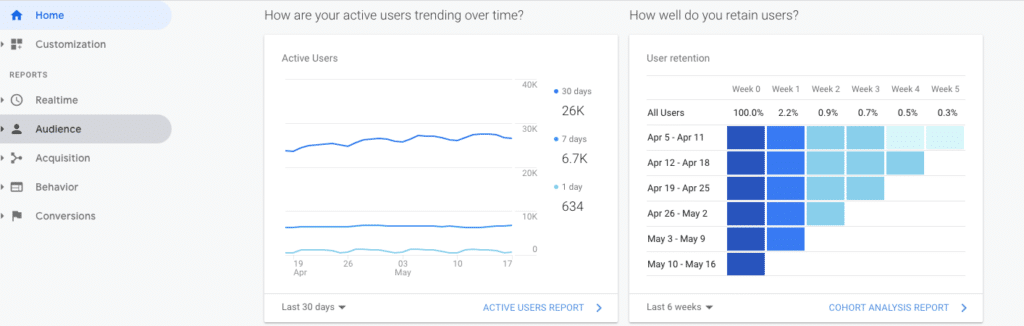
Google Analytics gives you a wide range of information that can help to inform your overall strategy.
Metrics are essential to determine the efficacy of your strategy. Metrics are also critical to properly pivot your strategy as it develops.
Simply measuring traffic alone, impressions, or even lead volume are unlikely to provide an accurate picture of growth. To get a good picture of what’s working and what’s not, it’s important to define metrics as a part of your goals, and understand how these metrics paint a bigger picture.
An effective digital growth roadmap should distinguish between visibility metrics, performance metrics, and business outcome metrics. Visibility metrics measure awareness. Performance metrics measure efficiency and conversion. Outcome metrics measure revenue, pipeline value, and customer acquisition cost.
Outcome-driven metrics can help you get a bird’s eye view of your strategy, but it’s important to dig deeper into visibility and performance metrics to understand how these outcomes are occurring. Outcome-driven metrics will also help to make your digital strategy accountable, as long as they have the right information behind them.
Regular reporting, including monthly performance reviews and periodic strategic adjustments, can keep your roadmap grounded in data instead of assumptions.
Avoid the Common Pitfalls
When digital growth plans don’t work, it can leave many questions unanswered. However, many digital growth plans fail for predictable reasons.
Some organizations attempt to do everything at once, overwhelming internal teams and diluting impact. Others underestimate the importance of foundational improvements, focusing exclusively on traffic generation while ignoring things like conversion gaps. Another common mistake is treating your digital strategy as a campaign instead of an ongoing system. Growth compounds when efforts are sustained and refined over time.
Finally, some businesses fail to adapt. But data provides signals. If something isn’t working, your roadmap should evolve accordingly.
Know When to Bring in Strategic Support
Building and executing a digital growth roadmap requires both time, expertise, and the right tools. For some organizations, internal teams are already stretched thin or lack specialized experience in areas like technical SEO, conversion optimization, or advanced analytics.
If growth has plateaued, if initiatives feel disconnected, or if clarity is lacking around digital ROI, it may be time to bring in a strategic partner.
A true digital partner doesn’t just implement tactics. They help define priorities, build sequencing, align departments, and ensure accountability, turning digital from a cost center into a growth engine.
Growth Favors Intentionality
Digital growth doesn’t happen by accident. It happens when your strategy aligns with execution, when data informs decisions, and when initiatives are introduced in the right order. A digital growth roadmap provides that structure. It replaces scattered efforts with coordinated action. It transforms marketing from a reactive process to a proactive system.
Creating a digital growth roadmap doesn’t necessarily mean doing more. Instead, it means focusing your efforts in a strategic way, by assessing your strengths, building on them, and filling in gaps. It also means using the right data and the right tools to determine what’s working, and pivot when necessary. With these elements in place, you’re setting your business and your department up for sustainable growth.