Accessibility Strategy
We can perform a full website accessibility review and get you compliant - because the web should be usable by everyone.
We want the web to be usable by all people - whether they're visually impaired, hearing impaired, or rely on adaptive technology. So should you. Accessibility has been a priority of ours since 2010.
8 issues we find on almost every site
Most accessibility problems are small, common, and fixable. Here's what turns up again and again, and how we fix it.
-
Low contrast
Text too close in color to the background is hard to read.
Why it matters We adjust colors to meet WCAG contrast ratios without losing your brand.
-
Missing alt text
Images with no text description are invisible to screen reader users.
Why it matters Every meaningful image gets a description; decorative ones are hidden from screen readers.
-
Missing link text
A link wrapped around an image alone doesn't give the user enough context.
Why it matters Each link gets text that says where it goes.
-
Ambiguous link text
"Click here" or "learn more" is confusing when read out of context.
Why it matters Links that describe their destination help everyone, including search engines.
-
Too many links
Screen readers read every link, and too many options is overwhelming.
Why it matters Cleaner navigation and skip links get people where they're going faster.
-
Empty form labels
Forms are tricky to complete when fields lack adequate labels.
Why it matters Properly labeled fields mean more completed forms and more leads.
-
Complicated form controls
Intricate dropdowns and custom controls often can't be used with a keyboard or screen reader.
Why it matters We rebuild them so they work with a keyboard and assistive technology.
-
Multimedia
Every video needs captions, and every audio file needs a transcript.
Why it matters Captions and transcripts serve deaf and hard-of-hearing visitors, and give search engines more to index.
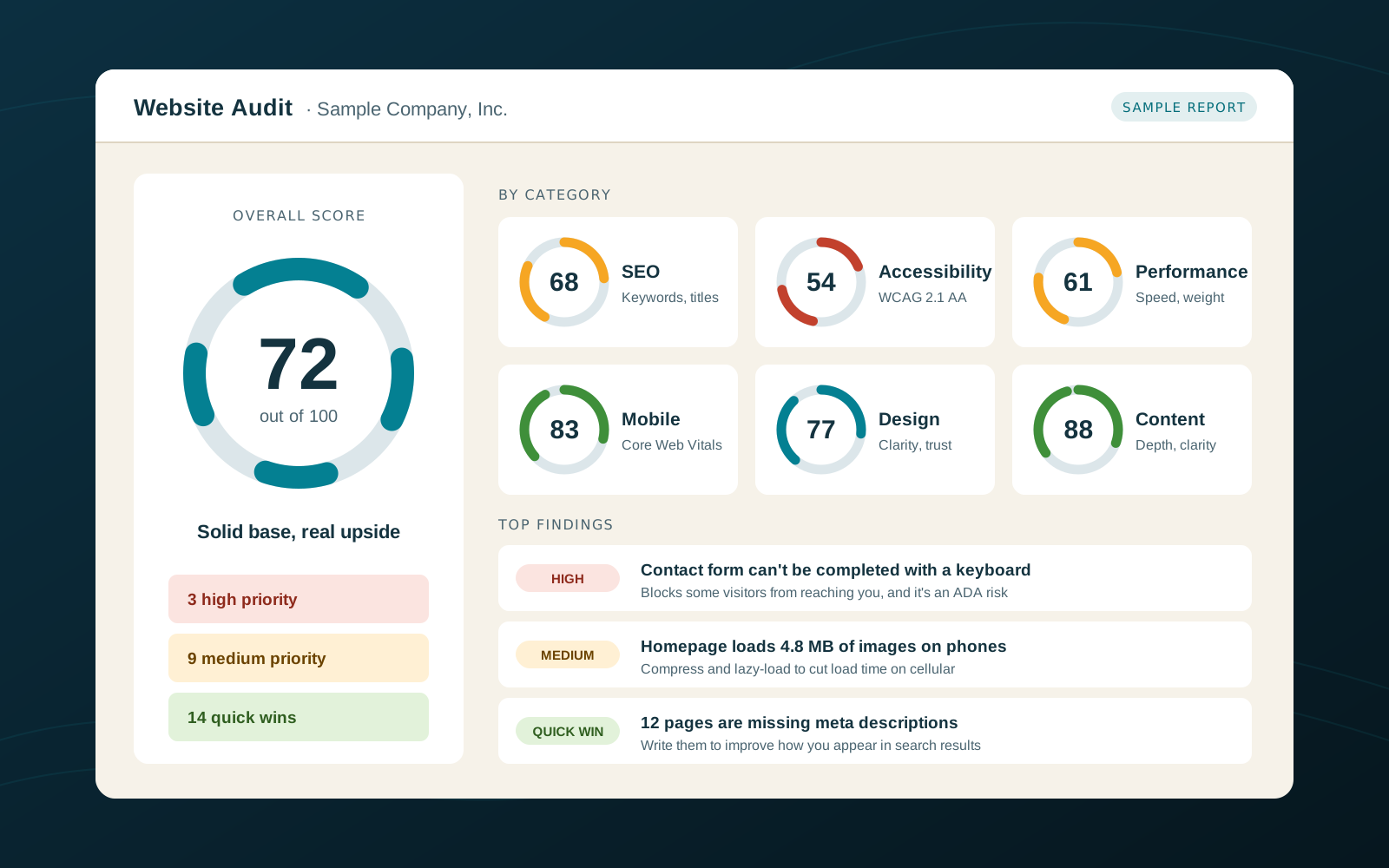
Get a free accessibility report, and a real plan
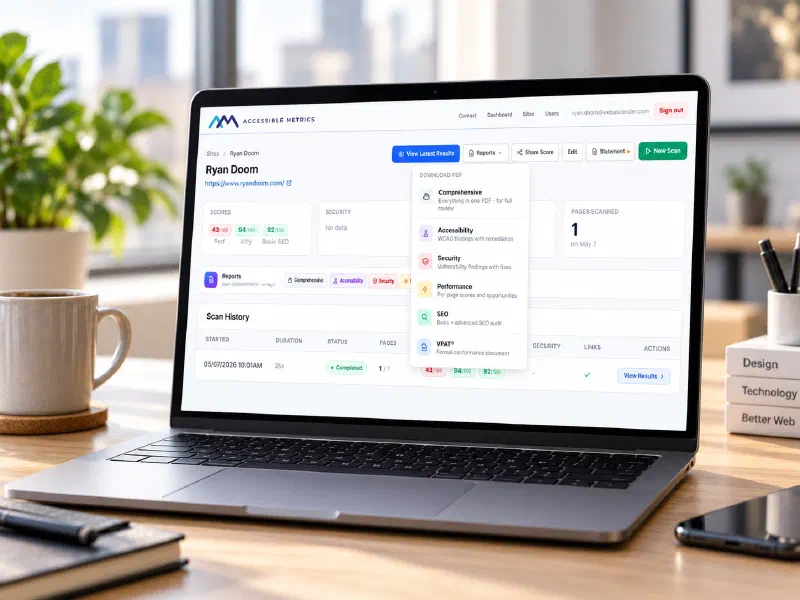
We'll scan your site with Accessible Metrics, our own accessibility scanning tool, and show you exactly where you stand.
- A free report on your site from Accessible Metrics, our own scanning tool
- Issues measured against WCAG, the guidelines a compliant site has to meet
- A clear picture of where you stand, from quick fixes to bigger changes
- A quote to bring you into compliance, with no obligation
What is website accessibility?
The simplest explanation: we want the web to be usable by all people - whether they’re visually impaired, hearing impaired, or require adaptive technology to interact with their computer.
We want to ensure everyone can browse the web, watch or listen to a video, access PDFs, read your content, and interact with forms and web applications. So should you.
How do you make a website accessible?
Web Ascender took on our first website accessibility project back in 2010, when our team was called upon to build a site whose primary audience was visually impaired and used screen reader technology.
During that project we learned the ins and outs of how screen readers and other assistive technology work, and how to build a fully functioning site for those users. From then on, we made it a priority to think about accessibility on every project we touch. Accessibility is a hot topic these days - but it’s always been a hot topic for us.
To be fully compliant, a website needs to adhere to the Web Content Accessibility Guidelines (WCAG). That means the HTML markup is compliant and the best practices set forth in the guidelines have been followed.
You can learn more about common issues on our Accessible Metrics blog, and get a free website scan at accessiblemetrics.com (a Web Ascender product!).
Ready to grow?
A 30-minute discovery call tells you if we're a fit - and what it would cost.
Get Started →or call 517-455-7837
The Executive Guide to Digital Domination
The exact strategy and tactics we deploy to grow our clients - free to download.
Get the Guide →Frequently asked questions
What does website accessibility mean, and does my business need it?
What is WCAG, and how do you check my site against it?
What are the most common website accessibility issues?
Can you fix my existing website, or do I need a redesign?
Explore further
Website SEO Audit
Accessibility and indexability go hand in hand - see where your site stands.
Learn more →Website Design
Accessible from the ground up - we build it in, we don't bolt it on.
Learn more →WordPress Development
Accessible WordPress builds - semantic markup and WCAG compliance from day one.
Learn more →