


Your website is a critical part of your organization. It’s how people find you, learn about what you do, and decide whether or not to engage. But maintaining a high-performing website has a lot of moving parts. It requires attention to accessibility, search engine optimization, performance, and security. For many people, that’s a lot to manage.
We’ve developed a simple and straightforward tool to help! Accessible Metrics simplifies website management by bringing all of these critical elements together into one platform, helping you understand what’s working, what isn’t, and what to do about it.
A Smarter Way to Understand Your Website
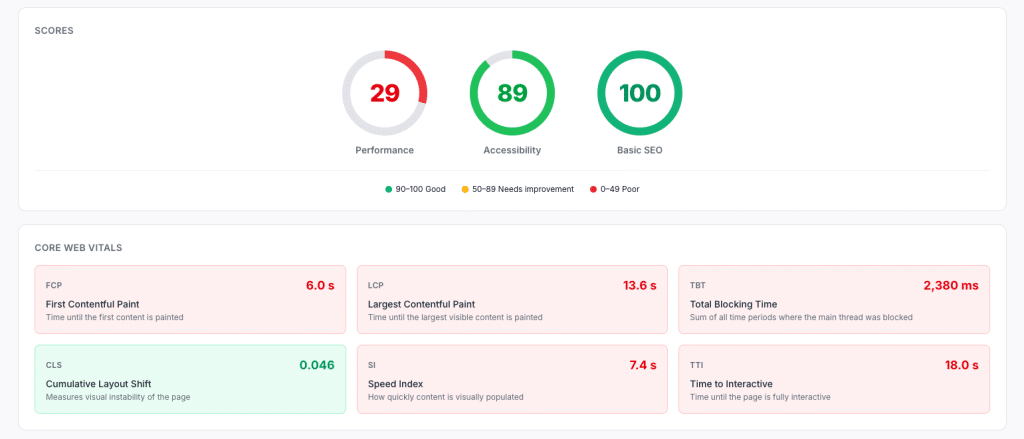 Accessible Metrics is designed to give you a complete picture of your website’s health. Instead of relying on multiple disconnected tools, it scans your entire site and evaluates it across four key areas: accessibility, SEO, performance, and security.
The information is also presented in a clear and intuitive manner. Rather than overwhelming you with technical jargon, Accessible Metrics translates complex findings into clear, actionable insights. Instead of simply stating what’s wrong, Accessible Metrics shows where the issue exists, why it matters, and how to fix it.
For organizations without a dedicated technical team, that clarity can make a big difference. It turns website improvement from a guessing game into a manageable, ongoing process.
Want to see Accessible Metrics in action?
Give it a try! Sign up today for free!
Making Web Accessibility Easy
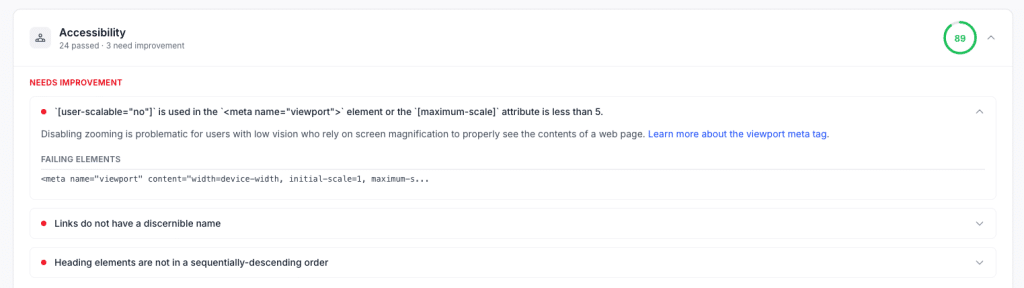
Web accessibility is essential. At its core, accessibility ensures that your website can be used by everyone, including people with disabilities. This includes individuals who rely on screen readers, keyboard navigation, or other assistive technologies to interact with digital content.
Accessible Metrics helps organizations align with WCAG 2.1 Level A and AA standards, which are widely recognized guidelines for accessible web design. These standards cover everything from text alternatives for images to proper heading structure and color contrast.
But accessibility isn’t just about compliance. It’s about creating a better experience for all users. A well-structured, accessible website is typically easier to navigate, loads faster, and it is more intuitive overall. In many cases, improving accessibility also improves usability and SEO at the same time.
For municipalities and nonprofits in particular, accessibility plays a critical role in ensuring equal access to information and services. For many municipalities in the US, this recently (April, 2026) became mandatory. Accessible Metrics helps make that goal more achievable by identifying issues early and providing guidance on how to resolve them.
Strengthening Your SEO
Search engine optimization (SEO) strategies have evolved significantly over the years. It’s no longer just about keywords, it’s about providing high-quality, trustworthy, and well-structured content that meets user needs.
Accessible Metrics helps you identify the factors that influence your visibility to search engines, including technical issues, content quality, and overall site structure. It highlights problems like broken links, missing metadata, and inconsistent heading structures, all of which can negatively impact your rankings.
It also helps you better understand concepts that are increasingly important in SEO today including:
- Content quality: how useful, relevant, and well-written your content is. Search engines prioritize content that genuinely helps users, rather than content created purely to rank.
- Structured data: a way of organizing information on your website so search engines can better understand it. This can enhance how your pages appear in search results, sometimes leading to rich snippets.
- Social metadata: how your content appears when shared on platforms like LinkedIn or Facebook, helping improve engagement and click-through rates.
- E-E-A-T signals: Experience, Expertise, Authoritativeness, and Trustworthiness are used by search engines to evaluate the credibility of your content and your organization as a whole.
Accessible Metrics helps surface opportunities to improve in all of these areas, giving you a clearer path toward better visibility and stronger performance.
Improving Performance and User Experience
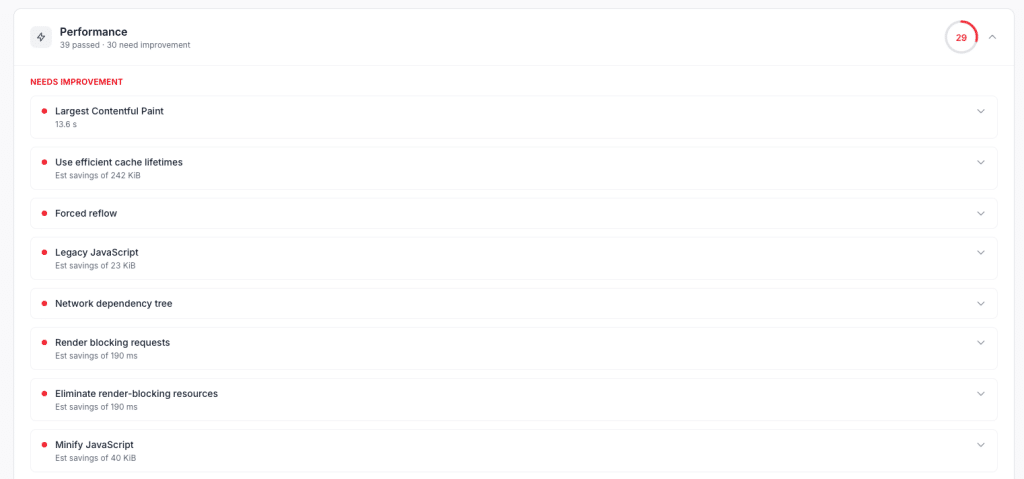
A slow or unresponsive website can drive users away before they even engage with your content. That’s why performance and, specifically, Core Web Vitals have become such a critical part of website optimization.
Accessible Metrics monitors key performance indicators like load time, responsiveness, and visual stability. It identifies issues such as oversized images, inefficient scripts, and mobile usability problems that can negatively affect the user experience.
Improving these elements doesn’t just make your site faster, but also makes it more enjoyable to use. Visitors are more likely to stay, explore, and convert when your site performs well, and search engines take that behavior into account when ranking your pages.
Locking Down Site Security
Website security is another area that often gets overlooked until something goes wrong. However, even small vulnerabilities can put your organization and your users at risk.
Accessible Metrics helps identify potential security concerns and best practice gaps, giving you the opportunity to address them before they become larger issues. This is important for trust signals. For example, having a clear cookie consent mechanism not only supports privacy compliance but also builds transparency with your users. These details may seem small, but they contribute to the overall credibility of your website.
Make your website essentials automatic
Try Accessible Metrics today >
Turning Insights Into Action
The ability to turn insights into action sets Accessible Metrics apart. It doesn’t just point out problems; it helps you prioritize and address them over time. With ongoing scans and reporting, you can track your progress, measure improvements, and ensure your site continues to perform at a high level.
This is especially important for organizations with evolving content. As your website grows and changes, new issues can emerge. Accessible Metrics helps you stay ahead of those changes, making website management a continuous, proactive process rather than a reactive one.
A Better Way to Manage Your Website
Managing a modern website doesn’t have to be overwhelming. With the right tools, it becomes a lot more approachable and a lot more effective. Accessible Metrics brings clarity to complexity. It helps you create a website that is accessible, fast, secure, and optimized for search engines, all while saving time and reducing guesswork. Give it a try today to see how Accessible Metrics can make your website essentials easier.